Inferior Vena Cava (IVC) Filter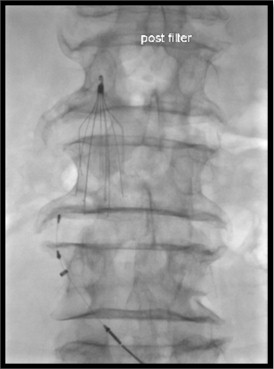
The inferior Vena Cava (IVC) is the largest vein that carries de-oxygenated blood from the lower half of the body to the right atrium of the heart. An IVC filter is a medical device that is implanted in the Inferior Vena Cava to catch pulmonary emboli (PE) (clot) arising from a deep vein thrombosis (DVT) (clot in the leg). Some filters are meant to be kept in for life and others are fitted with a device that allows them to be removed from the body using a catheter. This procedure is performed in the interventional radiology department. An IVC filter is inserted for the following reasons:
Thrombolysis: Iliocaval DVT's (emboli in the Illiac region) Preparation
You will need to fast for four hours before your appointment, this will ensure that your stomach is empty and eliminate the risk of aspiration (of fluid or food into the lungs). Please go to the peri-operative department on the day of your procedure and the staff there will prepare you and perform a set of routine observations before coming to the interventional radiology department for your procedure. Please continue to take all your regular medication with sips of water (unless otherwise instructed), including your blood pressure medication. Please inform the clerk at the time of booking your procedure if you are currently taking medication that thin your blood (eg Aspirin, Plavix, Warfarin) as these may need to be stopped a few days prior to your procedure. It may be useful to bring a LIST of medications to your appointment. You will need to have a blood test a few days prior to your appointment to assess your kidney function and blood clotting times. If your blood sample was taken outside the hospital then please obtain a copy of the results and bring it with you on the day of your procedure. You will need to bring any previous films (x-ray/CT/MRI/US) along to your appointment. It is important that you inform a member of staff as soon as possible if you are pregnant BEFORE the procedure is performed. If you suspect that you could be pregnant then you will need to have a pregnancy test at the hospital prior to the commencement of the procedure. This procedure involves the use of intravenous contrast; see Intravenous Contrast For health and safety reasons, family members cannot be present with you during the procedure. A staff member will be available to assist you at all times during the procedure if you have any concerns. A doctor will explain the procedure beforehand and you will be required to sign a consent form. If you require an interpreter, please inform the booking clerk at the time of booking. This procedure requires your groin area to be shaved. It is optional if you wish to personally attend to this prior to appointment. Procedure
Insertion: You will be asked to remove underwear and change into a hospital gown. All jewellery and metal objects in the area to be scanned will need to be removed as this can cause artefacts and obscure the images. You will be positioned on your back on the procedure table. A set of observations will be taken before the procedure begins (blood pressure, heart rate, etc). A sterile sheet will be draped over you with part of the groin exposed. A cold cleaning solution will be applied to clean the skin. Local anaesthetic will be injected to numb the area. A catheter (called a sheath) will be inserted using ultrasound guidance into the common femoral vein and guided into your blood vessels until it reaches the Inferior Vena Cava. You will not feel the catheter moving inside your body. Contrast agent and imaging will be used to ensure the catheter is in the right place. Once this is confirmed, the filter will be placed and the catheter is removed. Removal: The removal or retrieval of the IVC filter is the same procedure as the insertion; however the filter is taken out through the vessel in the neck using a special catheter or ‘snare’. After the Procedure
At the end of the procedure, the sheath will be removed and pressure applied on your groin area for about 10 to 15 minutes to stop bleeding.
Staff will inform you about the level of activity that is suitable after your procedure. Preparation Checklist
Don't forget to bring these along to your appointment
|
 |
Medical Imaging |
|